
A week before project acceptance, the on-site supervisor often has the following questions:
"All the anchor bolts have been installed, but we conducted several on-site pull-out tests, the data deviated the design values. The drawings are fine, the product reports are available. Now everyone is asking: exactly is the problem?"
1. exactly is the problem?
No one could immediately pinpoint the problem.
There were no records to trace the basis for those initial judgments.
Each party involved, within their own area of responsibility, claimed, "Theoretically, there's no problem."
Anchoring systems are often a crucial element at the intersection of design, construction, materials, environment.
When everything goes smoothly, it goes almost unnoticed; however, once problems arise, they are difficult to attribute to a single cause. Before starting a project, ensure the following confirmations are made:
(1) Confirm the application scenario stress mode
The same type of anchor bolt may have completely different working states in different projects:
Is it primarily subjected to tensile shear stress?
Is there vibration periodic load?
Is eccentric loading possible?
Is it a long-term load-bearing component?
This information is often fully reflected in the drawings, but it has a significant impact on the reliability of the anchorage. This is because some failures are due to insufficient strength, but rather to errors in the judgment of the stress mode.
(2) Confirm the condition of the base materials
Whether there are aged, cracked, repaired areas in the actual concrete
Whether it is a secondary pour composite structure
Whether the on-site construction quality is uniform
All these factors will change the true appearance of the anchoring interface. The performance of the anchor is always based on the true condition of the base materials.
2. How to confirm installation conditions construction feasibility
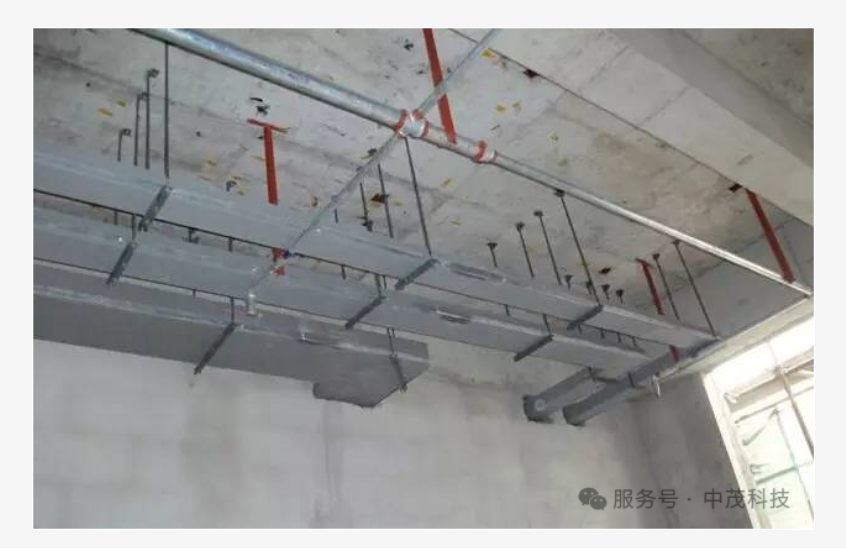
01 Many anchoring designs are valid on paper, but encounter practical constraints during on-site implementation:
Limited drilling space
Installation angle ideal
Insufficient humidity cleanliness in the construction environment
If these problems are only discovered during the construction phase, they often have to be "handled as best they can," which is precisely the source of risk.
02 Therefore, when conditions permit, it is necessary to communicate in advance:
Does the installation space meet the operational requirements?
Are special installation tools procedures required?
Is there a risk of inconsistent quality during batch construction?
Confirming construction feasibility in advance is essentially to prevent deviations the correct design during implementation.
So how do we identify environmental factors their long-term effects?
Anchoring systems are short-term components, but rather part of long-term service. In some applications, we consider this in advance:
Are the anchors subjected to high humidity, corrosion, frequent temperature fluctuations for extended periods?
Is there any continuous vibration impact?
Should long-term performance degradation be considered?
These types of issues are usually a focus of discussion during the procurement phase, but they gradually become more prominent during the operation phase. We need to realize that time environment are also "part of the load."
Because in engineering projects, the root cause of some accidents is the lack of standards the substandard products; rather, it is the assumption of certain premises, the neglect of on-site differences, the failure to consider these variables in a comprehensive manner.
The aforementioned confirmations essentially only help to make these implicit conditions explicit. Anchoring is never a "single product behavior," but rather the result of the combined effects of structure, construction, environment, time.
Edited by Ding Yi
Reviewed by Zheng Yuehua

ZHONGMAO
Scan the QR code to follow
Official website丨www.zmwj.cn
Telephone丨0512-86162111
0512-86162111



